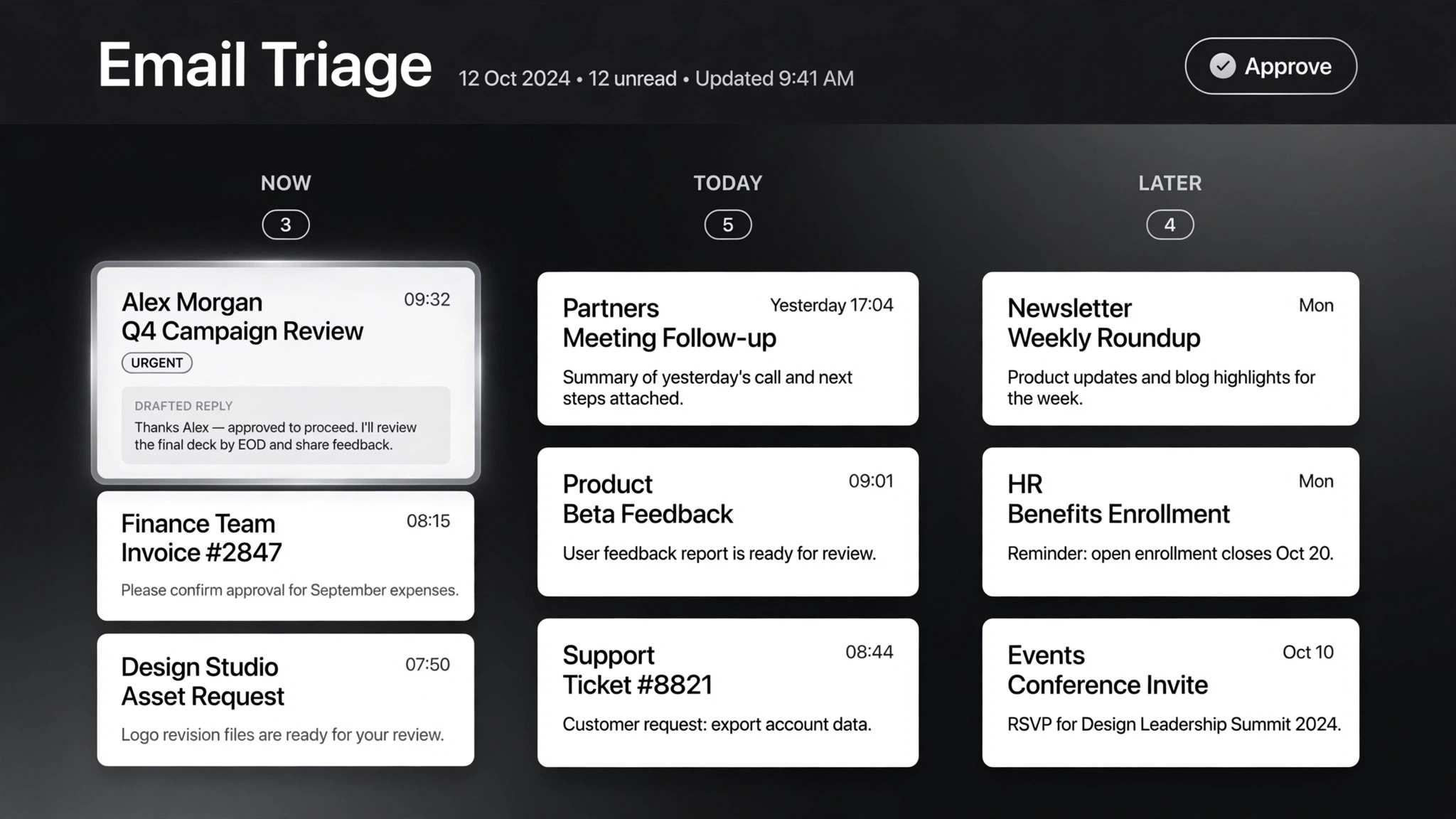
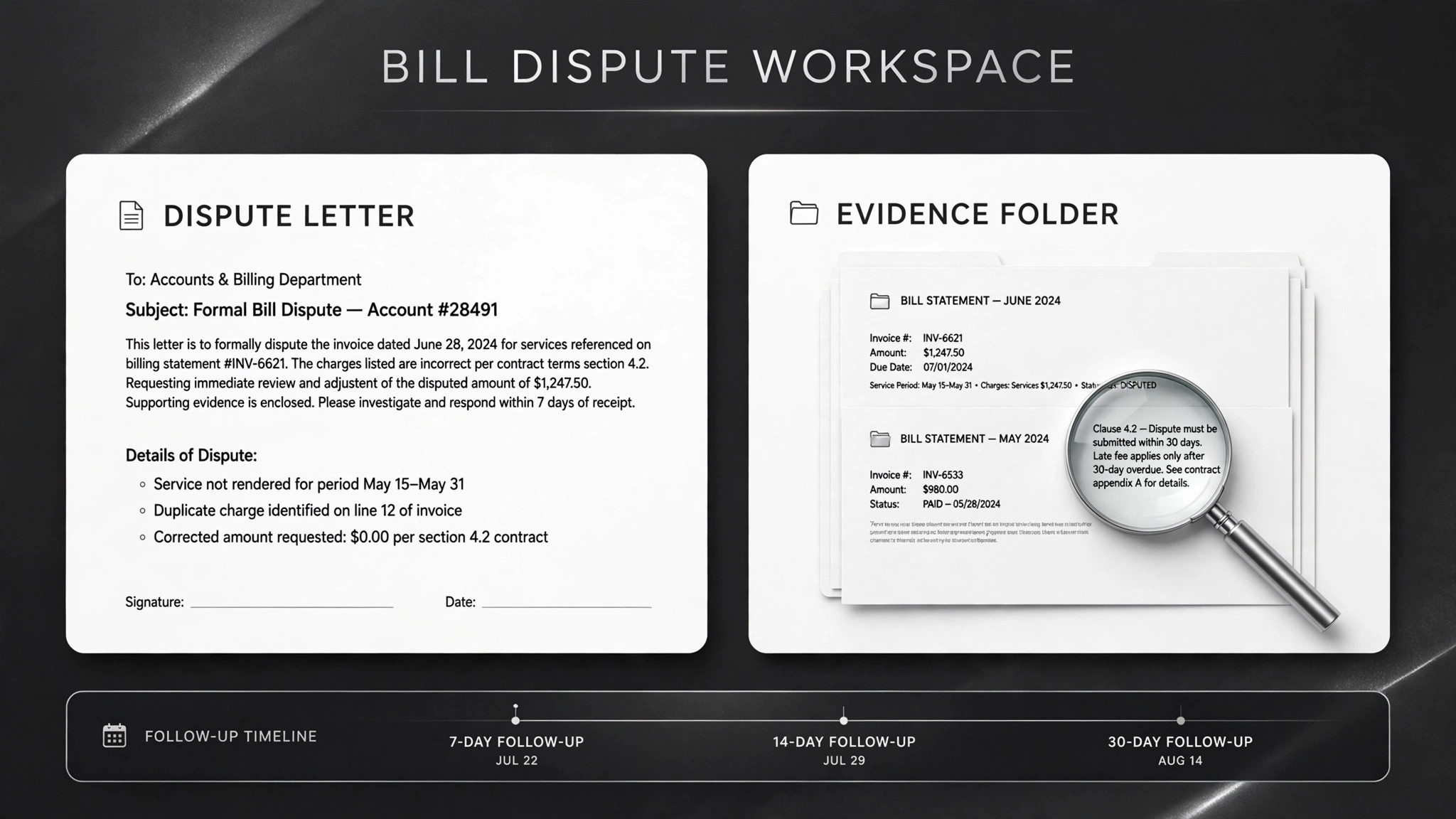
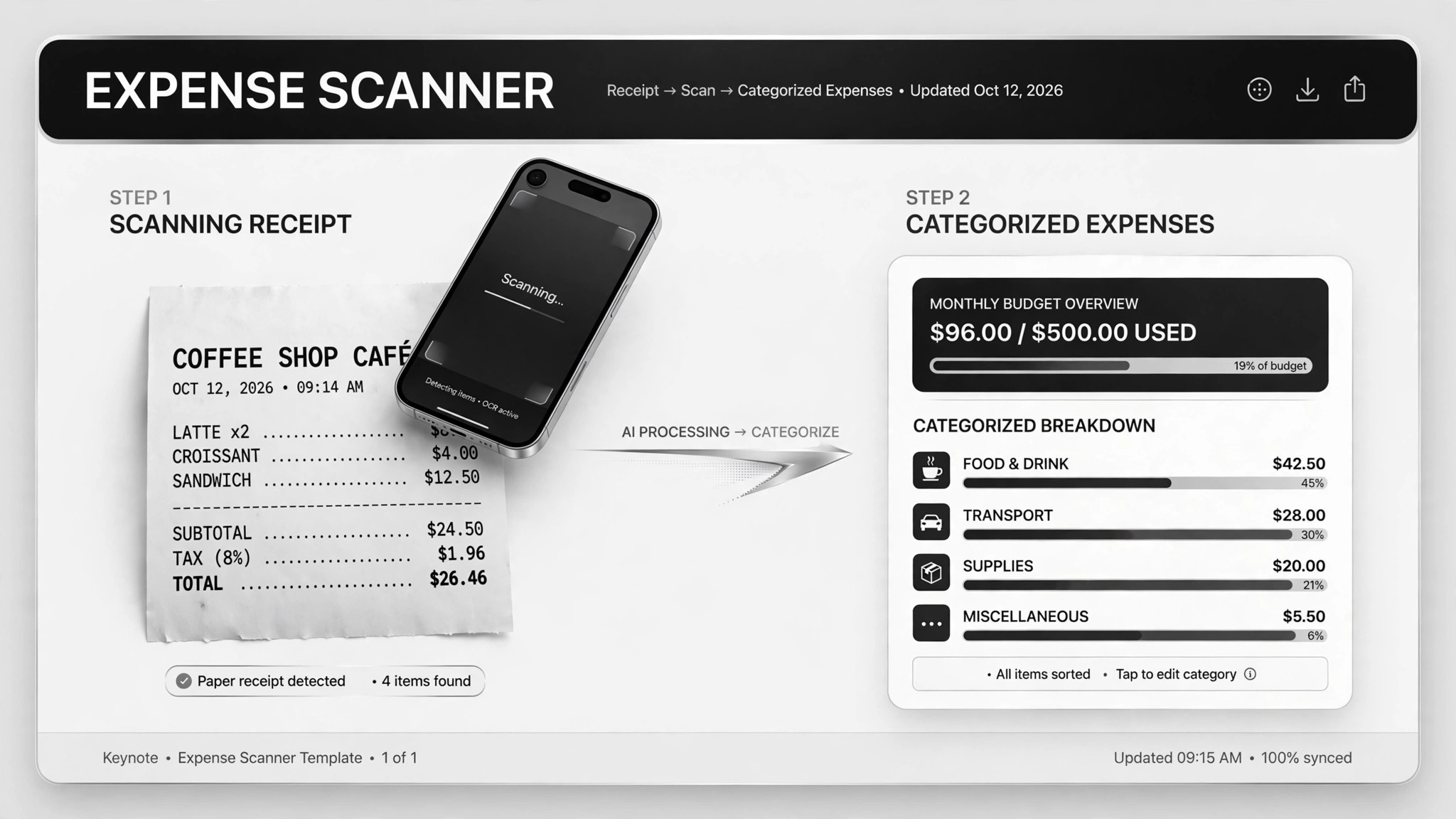
Ad Copywriter
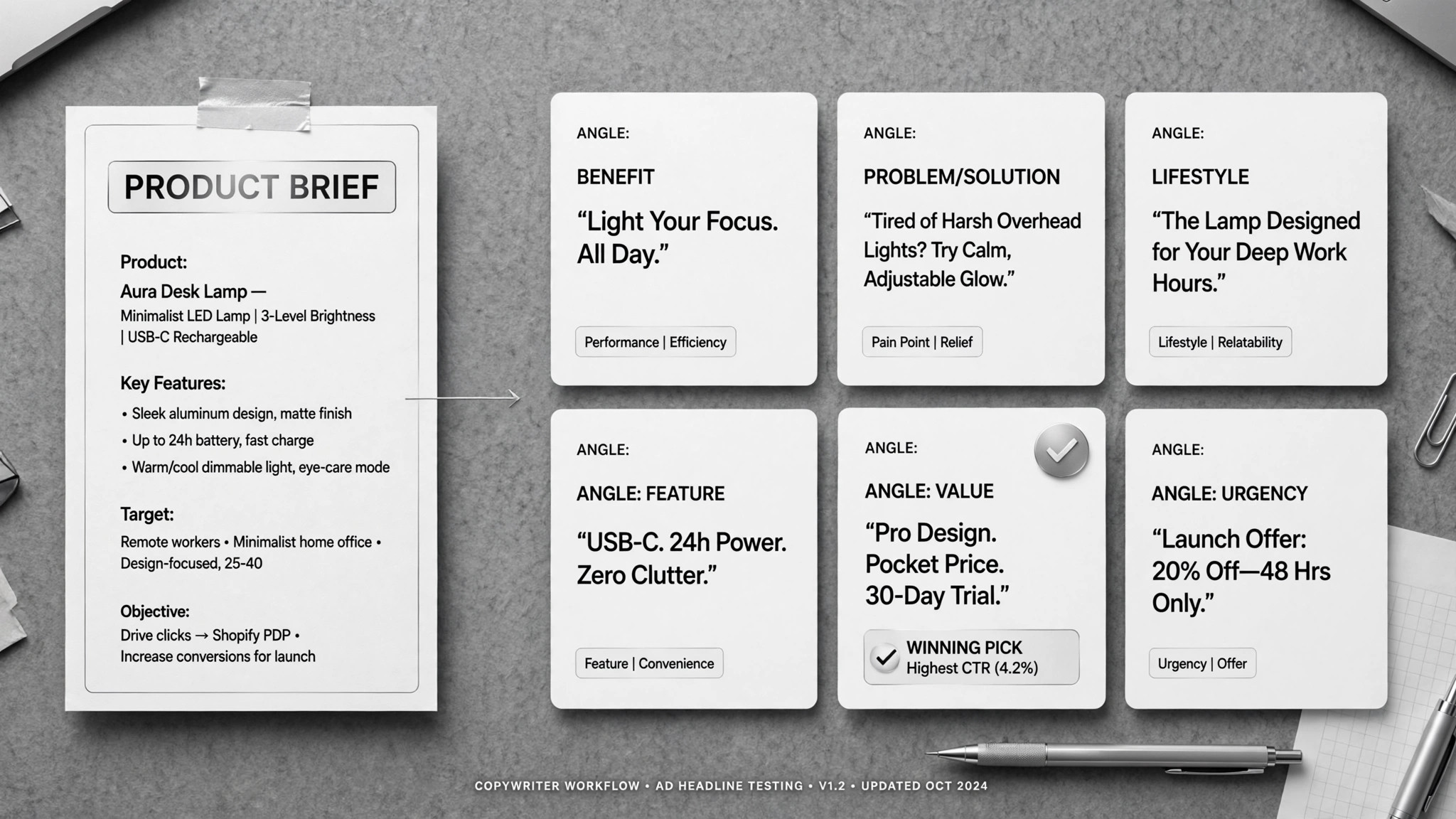
One brief in, a stack of on-spec ad copy out — you pick winners.
Turns a creative brief into a stack of platform-ready ad headlines, bodies, and descriptions in a senior copywriter's voice — you pick the winners, polish, and launch.
Install it in 3 steps
No sign-up. No CLI tools. Pick your AI, copy one line, paste it over.
Prefer doing it yourself? Download the ZIP, unzip it into the directory shown above, restart your AI session — same result.
Real-world proof
Real people did this exact job with AI agents.
Write Meta campaign copy as a senior copywriter
Read case →Use caseGenerate ad variations and pull campaign data for growth marketing
Read case →What’s inside
One SKILL.md (the playbook) + one starter template. A preview:
Ad Copywriter
When to use
- You need Meta or Google ad copy and don't want to start from a blank brief
- Launching a new product or offer and want several angles tested, not one guess
- Your campaign data shows ads with low CTR or high CPA that need fresh variants
- You have a good-performing ad and want variations that keep what works while fixing what doesn't
- An agency quotes weeks of work for something you can generate and QA in an afternoon
Workflow
Describe the product, the target audience, the core benefit, and the tone of voice — one paragraph each is enough. Don't skip the audience's pain point, because every headline will trace back to it. If there are compliance constraints (no before/after claims, no medical promises), put them in the brief now, not later.
- Write the brief (input: product info → output: creative brief)
Decide how many angles to explore (3–5 is plenty) and how many variants per angle. Look up the platform character limits — headline, body, description — and write them into the spec. The AI should never have to guess the limits; every variant that comes back must already fit.
- Set the angles and limits (input: brief → output: generation spec)
Have the AI work in the voice of a senior direct-response copywriter: one idea per variant, each tagged with its angle. Ask for headlines, body copy, and descriptions as separate sets so you can mix and match later. If two variants read alike, one of them gets cut.
- Generate the stack (input: brief + spec → output: copy variants)
When you have past data, filter for ads with low CTR or high CPA above your threshold and generate variants specifically for those losers. This turns guesswork into a hit list. Keep the original ad ID attached to each variant so you can compare performance later.
- Mine your campaign data (input: ad performance CSV → output: rewrite targets) — optional
You read every word before it goes live. Cut duplicates, check every claim against the brief, and verify character counts. Flag anything that could fail ad review. Only after QA do the variants move into your ad tooling.
- Pick, polish, QA (input: copy stack → output: launch-ready copy)
Output spec
- Headlines, body copy, and descriptions grouped by angle, each tagged with its angle
- Every variant within platform character limits; the count stated next to each line
- Each variant traces back to a brief fact (pain, benefit, or offer) — nothing invented
- Data-driven variants carry a source line: which ad they replace and why it underperformed
- Companion template.md brief skeleton — fill in the blanks and use it
Good vs. bad examples
- ❌ Bad headline: "Revolutionize your workflow with cutting-edge AI technology" (could describe any product;